7 mistakes when using your sparkling water maker (and how to avoid them)
Compartir
Making sparkling water at home is one of those things you learn in thirty seconds and master over time. The machine works on the first try, yes, but between “it works” and “bubbles like those in a good restaurant” there are a handful of details that almost no one tells you.
If your water comes out less carbonated than you would like, if your CO₂ cylinder lasts less time than expected, or if you’ve had a scare with the bottle, it is very likely that you are making one of these seven mistakes when using your sparkling water maker. We’ll go over them one by one, with the solution for each case.
1. Carbonating water at room temperature
This is, by far, the most common mistake. CO₂ dissolves much better in cold water: the lower the temperature, the more gas the liquid can hold and the longer the bubbles last. With lukewarm tap water, no matter how many times you press the button, the result will always be weaker and it will go flat faster.
The solution: always keep a bottle in the fridge and carbonate only very cold water. If you're in a hurry, a while in the freezer (without letting it freeze solid) works miracles. Manufacturers themselves insist on this point in their user manuals: cold water, always.
2. Exceeding the fill line
The line marked on the bottle is not decorative. Above it, there is not enough room for the gas to mix with the water, so the CO₂ escapes through the valve instead of dissolving, and it also splashes you. Below it, you waste gas carbonating air.
The solution: always fill to the maximum level mark indicated on your bottle and not a finger more. It’s a two-second gesture that makes a difference in the intensity of the gas and how long the cylinder lasts.
3. Carbonating juices, sodas, or flavored drinks
It’s tempting: if it works with water, why not with juice? Because the machine is not designed for that. Liquids with sugars, pulp, or flavorings foam uncontrollably, dirty and clog the internal parts, and can cause overpressure inside the bottle. Manufacturers are clear: carbonating anything other than water voids the warranty and can damage the device.
The solution: always carbonate plain water and add the flavor—lemon juice, fresh fruit, a syrup, a cold infusion—afterwards, directly in the glass or in the carbonated bottle, stirring gently. The result is the same and the machine will thank you. We go into detail about this in our article on what you can carbonate with a sparkling water maker.
4. Pressing the button haphazardly (or all at once)
Many people press the button without counting and are then surprised that one day the water comes out flat and another it overflows. The machines are designed for short, spaced-out pulses: each one introduces a dose of CO₂ that needs a moment to dissolve before the next one.
The solution: start with two or three pulses, test it, and increase from there until you find your preferred level. Leave a second between pulses, and wait to hear the hiss of the excess gas being released before removing the bottle. Never force the bottle out: the machine releases it on its own.
5. Mishandling the CO₂ cylinder
The cylinder is the part that deserves the most respect and receives the least attention. Changing it with the bottle still attached, overtightening it, storing it next to the oven, or leaving it in the car in summer are habits that range from unnecessary to dangerous: this is a pressurized container.
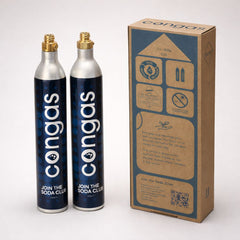
The solution: always remove the bottle before changing the cylinder, screw it in firmly but without forcing it, and store it in a cool, dry place, away from heat sources and without exposing it to high temperatures. And don't throw it away: the cylinders are designed to be returned and refilled. You can see how much each one yields in our guide on how long a CO₂ canister lasts.
6. Not cleaning the bottle (or the machine)
The bottle only contains water, so it seems like it doesn't need to be washed. But daily use, the remains of lemon you added afterward, and accumulated moisture eventually leave behind odors and biofilm. And the carbonating head also accumulates limescale and splashes.
The solution: wash the bottle by hand with warm water and mild soap—never in the dishwasher or with very hot water, unless the manufacturer indicates otherwise, because the plastic can deform. Let it dry upside down and wipe the nozzle and the outside of the machine with a damp cloth every week. You have the complete step-by-step in how to clean your sparkling water maker.
7. Leaving the bottle open (and losing all the gas)
You carbonate a great bottle, pour yourself a glass, leave it on the counter, and the next day it's dead. Normal: the dissolved CO₂ seeks to escape as soon as the pressure drops and the temperature rises. Every moment out of the fridge with the cap loosely screwed on is gas that is disappearing.
The solution: screw the cap on tightly immediately after serving, return the bottle to the fridge, and pour by tilting the glass to avoid agitating the liquid. It is better to carbonate quantities that you will consume in the day than to fill it up and have it go flat. We’ve gathered more tricks in how to keep the gas in your sparkling water.
Quick Summary
|
Mistake |
What it causes |
What to do |
|
Lukewarm water |
Few bubbles, short duration |
Always carbonate cold water |
|
Exceeding fill line |
Wasted gas and splashes |
Respect the level mark |
|
Carbonating juice/sodas |
Obstructions, damage, voided warranty |
Carbonate water, flavor afterward |
|
Consecutive pulses |
Irregular results |
Short, spaced-out pulses |
|
Mishandling cylinder |
Risk and unnecessary wear |
Remove bottle, store in cool place |
|
Not cleaning |
Odors and residue |
Weekly hand washing |
|
Open bottle |
Gas escapes |
Cap and fridge immediately |
Fewer mistakes, better bubbles
None of these seven points requires effort: they are habits. Cold water, fill line, only water inside the machine, calm pulsing, well-treated cylinder, weekly cleaning, and capping on time. With that, every glass comes out with the gas you want and your CO₂ goes much further.
And if you still don’t have your machine on your counter, this is a good time to stop carrying packs of bottles: discover the CONGAS sparkling water makers and start making your own bubbles at home, without single-use plastic. Already have one and running out of gas? Order your CO₂ cylinder refill and keep bubbling.